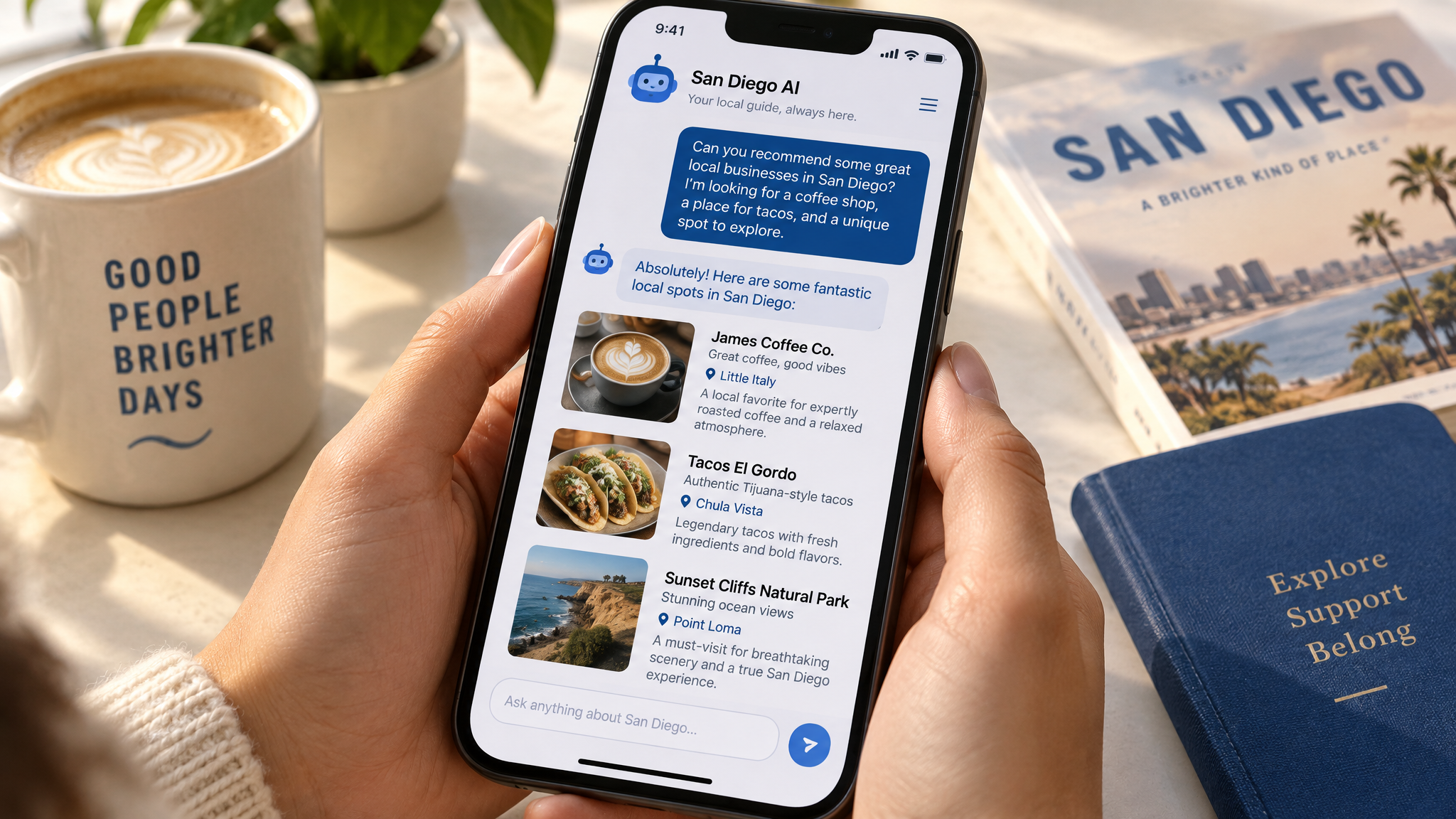
Voice search is when people ask a device like Siri, Alexa, or Google Assistant a question out loud instead of typing. Because assistants usually read back a single answer, showing up means being the one clear, trusted result for a specific question, which comes down to conversational content, strong local signals, and structured data.
How voice search is different
Typed searches are short, like "plumber San Diego." Voice searches are longer and conversational, like "who is a good plumber open near me right now." Assistants also tend to give just one answer, so there is no page two to fall back on. You either are the answer or you are not.
How to show up in voice results
- Write content the way people actually speak and ask questions.
- Create FAQ content that answers specific questions directly.
- Keep your Google Business Profile accurate, especially hours.
- Use structured data so assistants can read your answers.
- Focus on local, since many voice searches are "near me" requests.
Why local businesses win here
A large share of voice searches have local intent, and they often happen when someone is ready to act, like calling or visiting. That makes voice a real opportunity for local businesses that keep their information accurate and answer common questions clearly.
The connection to AI search
Voice search and AI answers rely on the same foundation: clear, direct answers and trustworthy business information. Optimizing for one strengthens the other, so the work you do here pays off across modern search.
About the author
Yaffa Doushy
Co-Founder, SoulSisters Digital Marketing
Yaffa Doushy is a co-founder of SoulSisters Digital Marketing. She focuses on AI search optimization, content, and helping small businesses show up in tools like ChatGPT, Perplexity, and Google AI Overviews. She is passionate about making powerful marketing accessible to businesses of every size.